Trying Perfume Layering? Start with Two Scents You Already Know
A small, low-pressure way to explore layering without turning two good fragrances into a guessing game.
Layering sounds like a way to create a completely personal scent. In practice, the first useful step is much smaller: find out whether you enjoy two familiar fragrances near each other.
You do not need to buy a collection for the experiment. Begin with what you already have and like.
Keep the question specific
Ask what you want to change. Would you like a fresher opening beside a warm fragrance? A softer impression beside a dry one? “Make it better” is hard to test. “See whether a little freshness suits this” gives you something to notice.
Neither fragrance needs fixing. Sometimes the best result of the experiment is deciding that you prefer each on its own.
Start on separate strips
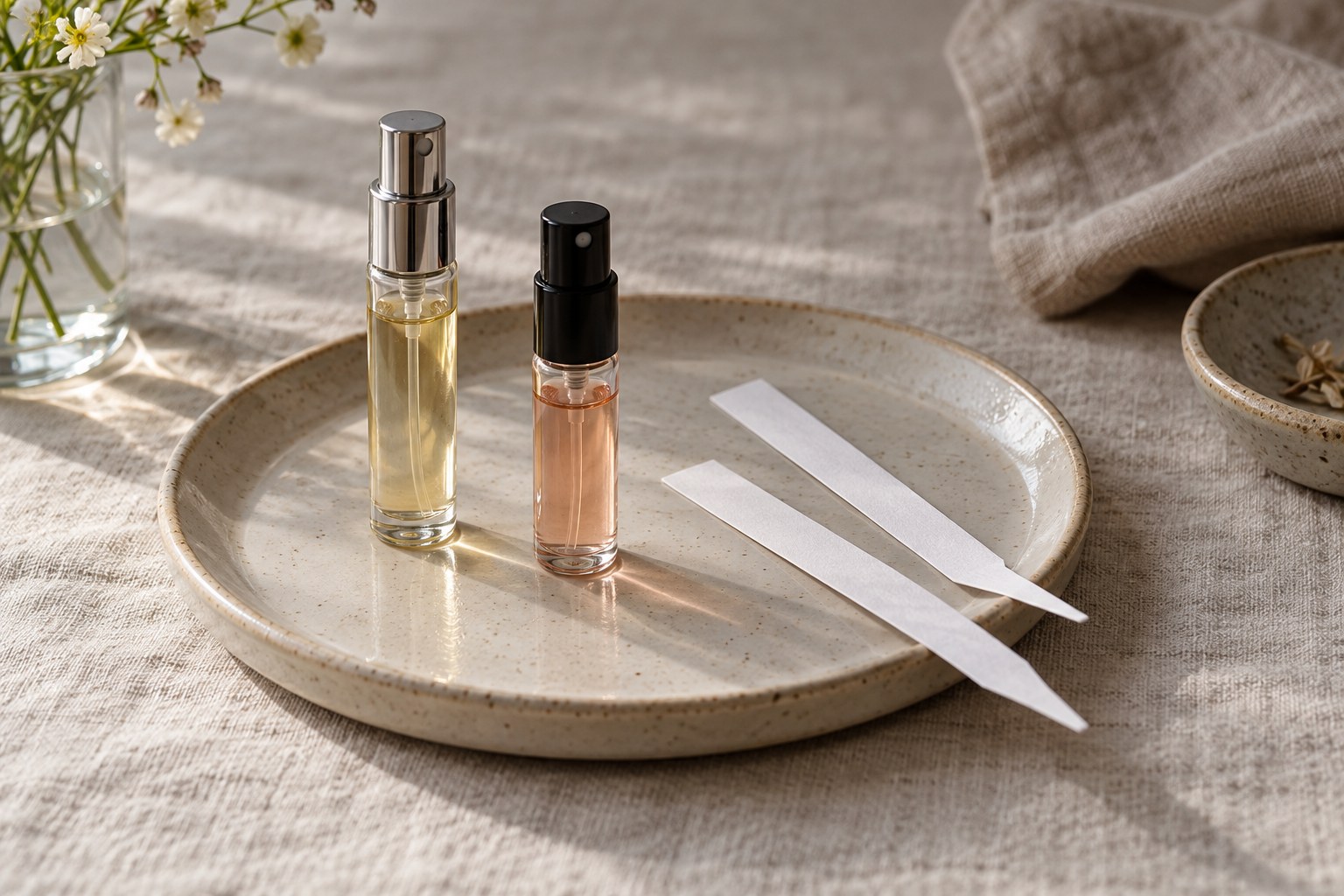
Spray each fragrance on its own strip and smell them separately. Then hold the strips near each other without combining the liquid. This is only a first impression, but it helps you spot a pairing you dislike before wearing it.
Change one thing at a time. If you add three fragrances at once, it is difficult to know which part of the combination you want to keep.
Try a modest wear test at home
If the strip test interests you, try a small amount according to each product’s directions on a day without important plans. Keep the original liquids in their own bottles; layering does not require pouring perfumes into a shared container.
Use less total fragrance than you might expect to need. You are testing a combination, not trying to make both scents equally loud. Notice the later impression as well as the opening.
Use brand suggestions as ideas
Jo Malone London describes scent pairing as a personal choice and suggests beginning with two scents. Its own fragrances are designed with layering in mind, so that guidance offers a starting point rather than a guarantee for every product from every brand.
If a combination works for you, note the two fragrances and approximate amounts. Repeat it before calling it your new routine. A good pairing should be enjoyable to wear, not just interesting to explain.
Reference: Jo Malone London: Scent Pairing.
Illustration generated with AI; the bottles shown are generic.